Having considered in a previous piece whether AI can replace a therapist, a more practical question begins to emerge.
Where can AI actually be useful?
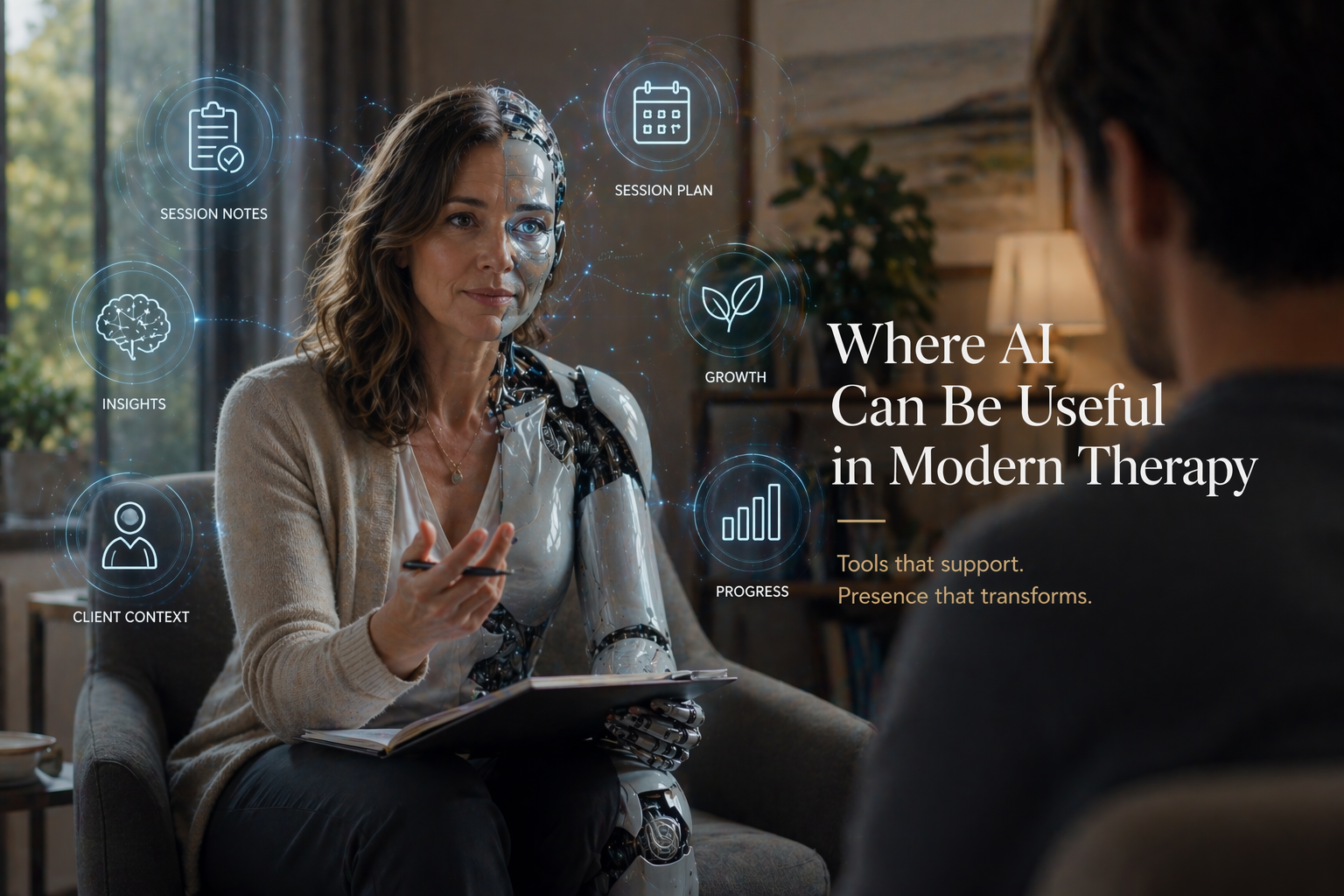
Because while artificial intelligence cannot replicate presence, relationship or the deeper dynamics of transformation, it can still play a meaningful and supportive role within the therapeutic process.
Used well, it enhances clarity, structure and continuity. Used poorly, it risks creating distance from the very process it is meant to support.
Supporting Session Structure and Continuity
One of the most immediate uses of AI is in helping to organise what has occurred across sessions.
A therapist may use it to expand on notes, track themes over time or assist in creating a structured session plan. This can be particularly helpful in longer-term work where patterns unfold gradually. That said, a good therapist will always remain flexible and adapt to what presents in the moment rather than following a fixed structure.
AI can also be useful when working with clients whose sessions are irregular or who return after a period of time. It can help create a brief refresher of what has previously been explored, allowing the therapist to re-enter the work with greater continuity. However, this requires care. Issues of confidentiality, consent and data protection are central and any use of AI in this way must remain aligned with GDPR requirements and appropriate limits on data retention.
Supporting Reflection Between Sessions
For clients, AI can be helpful between sessions. It can support reflection, help articulate thoughts more clearly and highlight patterns that may not have been fully recognised. It can also be used to generate simple psychoeducational material or exercises that supports understanding between sessions.
A Reflective Tool for Therapists
AI may also assist therapists in considering different perspectives or approaches, particularly useful for contemporary Integrative Psychotherapists working across multiple modalities. It can act as a light reflective tool but it should never replace proper supervision or clinical judgement.
Reducing Administrative Load
There are also practical benefits. AI can help draft communications, summarise material and reduce administrative load, allowing the therapist to focus more fully on the work itself. It may also be used in areas such as marketing and communication, although this is a separate area in its own right.
The Risks of Over-Reliance
At the same time, there are risks.
Over-reliance on AI can lead to over-structuring or a false sense of progress where insight is mistaken for deeper change. For clients, it may become a way of avoiding more difficult emotional work.
These are subtle shifts but they matter.
The Future of AI in Therapy
In the future, the most effective use of AI in therapy is likely to be supportive rather than central.
It can help organise, reflect and extend the work beyond the session.
But it remains the human relationship that allows that work to take root and become meaningful.
Used with awareness, AI can enhance therapy.
Used without it, it risks becoming another layer between the person and the change they are seeking.